Wildlife charities, Essex Wildlife Trust and Buglife, are worried that imminent planning decisions made on 24 February could mark a tipping point for Thurrock’s unique wildlife, with irreversible losses of species.
The charities are looking to Thurrock Council to recognise the national importance of its wildlife by taking a bold step and preventing any further destruction of its network of nature sites.
Thurrock as a haven for rare wildlife
Despite its small size, Thurrock is home to nationally important populations of invertebrates and other scarce wildlife. These species have thrived on its mosaics of coastal habitats and its unusual, flower-rich brownfield sites created by its industrial history and its location on the south-facing bank of the Thames Estuary.
The network of Local Wildlife Sites (LoWS) in the area recognises this and provides the local framework for Essex’s recently published Local Nature Recovery Strategy (LNRS). However, despite this, LoWS still have little protection in the planning system.
Ongoing planning pressures
With so much development pressure on this small corner of the historic county of Essex, there has been progressive loss of sites across this network in recent years to both housing and industrial expansion.
Over half of wildlife-rich brownfield sites in the Thames Estuary identified between 2005 and 2007 were either lost or subject to planning permission in just a six-year period. Since then, pressure on wildlife-rich brownfields has only intensified and this includes high profile habitat losses to the Tilbury 2 port expansion and now, despite local residents’ and the Council’s objections, more wildlife sites are ear-marked for destruction to make way for the Lower Thames Crossing.
In Thurrock, the next few months could also see more destructive proposals considered, including for the Google-led Thurrock Data Centre on the Arena Essex Local Wildlife Site, which is the target of a petition signed by over 30,700 supporters to date.
A defining day for Thurrock’s wildlife – 24 February
After more than 20 years of campaigning and calls for action, the two wildlife charities are now highlighting that Tuesday 24th February is a defining day for Thurrock’s wildlife.
Decisions are expected to be made for:
- The latest Port of Tilbury expansion, Tilbury 3, which would see the loss of its unique ash-fields of Pulverised Fuel Ash (PFA), which are part of the West Tilbury Marshes LoWS.
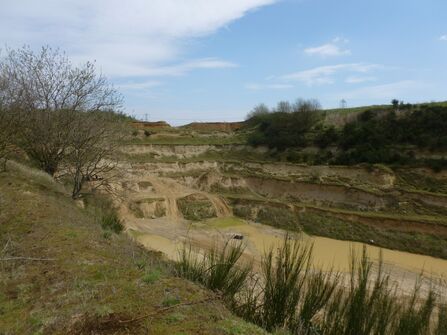
- Just three miles up the road, there are plans to fill in and destroy the special flower-rich sand terraces of Buckingham Hill Pit LoWS, as part of wider quarrying plans in the area.
The applications for Port of Tilbury and Buckingham Hill Pit are expected to be considered on Tuesday, with approval recommended, despite objections to the applications from a range of other organisations, including the RSPB, Essex Field Club and Essex Badger Protection Group, and alongside over 1,100 local objections to Buckingham Hill Pit.
Despite their protection under the Thurrock Local Plan and their essential role in the future success of Essex’s LNRS, both applications recommend approval.
If approved, both proposals would see the complete destruction of these Local Wildlife Sites’ populations of extraordinarily rare bees, wasps and other special invertebrates.
Plea from wildlife charities
Essex Wildlife Trust and Buglife argue that significant changes need to be, and can be, made to both planning applications. We ask that the Council’s planning committee recognises that this is now the time to act to prevent these completely avoidable losses of sites and to move from last-minute prevention to forward-looking district-wide nature conservation plans to match the increasing pace and scale of development pressures.
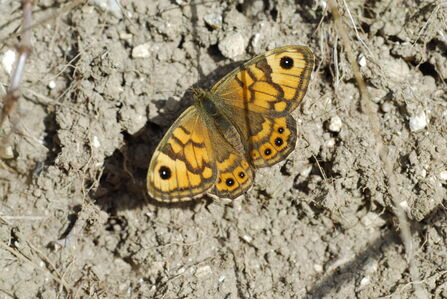
If Thurrock’s Planning Committee decide to follow the recommendation for approval, it would be a bitter blow to Thurrock’s wildlife, which includes special species like the Shrill Carder Bee (Bombus sylvarum), the Critically Endangered Stripe-eyed Paragus hoverfly (Paragus albifrons) and the Endangered Wall Butterfly (Lasiommata megera).
A masterplan for the recovery of Thurrock’s unique wildlife is urgently needed, with the Council working collaboratively with wildlife experts and the local community, putting it firmly on the national stage as an example of a Local Nature Recovery Strategy (LNRS) in action.