

Transforming Thameside
The ancient history of Mucking
Archaeological excavations at Mucking have revealed evidence of continuous or repeated occupation since Neolithic times, over 3,000 years ago. Britain's first farming communities would have lived here, overlooking the Thames Estuary.
In the Bronze Age, a hillfort was erected, and in the Iron Age more than 100 roundhouses have been identified. During the Roman period, a Romano-British cemetery and a villa were found here. One of the largest and most important Anglo-Saxon settlements, with over 200 buildings and more than 800 burial grounds was discovered in Mucking. In the Medieval period, the land moved back to agricultural farms.
The site remained farmland until a gravel works was opened, collecting materials to help build the city of London. Once excavations were finished, the holes were filled with landfill. For over 50 years, thousands of tonnes of London's waste were deposited here, becoming one of western Europe's largest landfill sites. In some areas, the waste reached depths of up to 30 metres.

Thameside circa 1998 - credit Enovert
From landfill to living landscape
The landfill site was capped off, with a protective layer sealing it in. In 2012, Essex Wildlife Trust took over the management of the new land.
In May 2013, the first 120 acres of Thameside and the new Nature Discovery Centre were officially opened by Sir David Attenborough, who described the site as a "miracle". The fully accessible Nature Discovery Centre has been built to look like the hillforts of its history, with panoramic views overlooking the Thames Estuary and the reserve.
Conservation works at Thameside
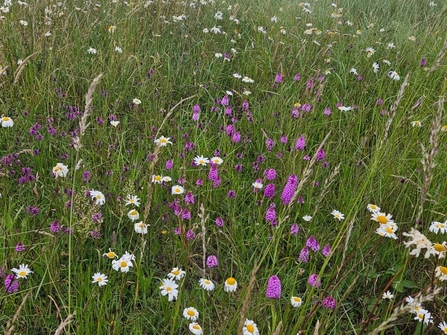
The reserve is continually developing. There are wildflower meadows using seeds donated from other Essex Wildlife Trust reserves, dense scrub habitat supporting songbirds and invertebrates, grassland managed by conservation grazers to improve biodiversity, lakes that support rare fish, habitat banks for invertebrates and reptiles, and areas of trees, planted by the local community.
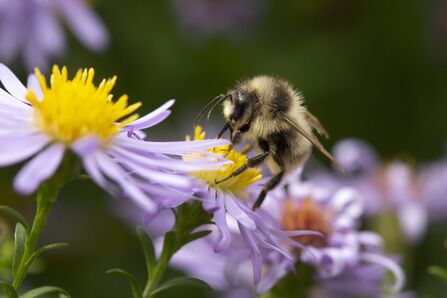
Shrill Carder Bee (Bombus sylvarum) - Photo: Neil Aldridge
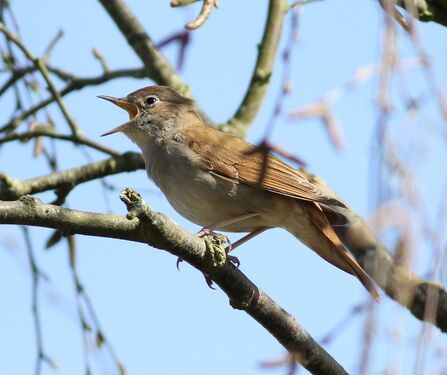
Nightingale at Fingringhoe Wick by Alan Reynolds
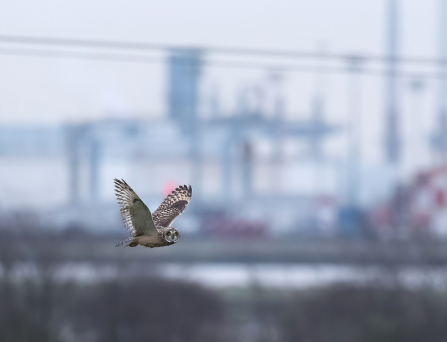
Photo: Stephen Hiscock on Flickr
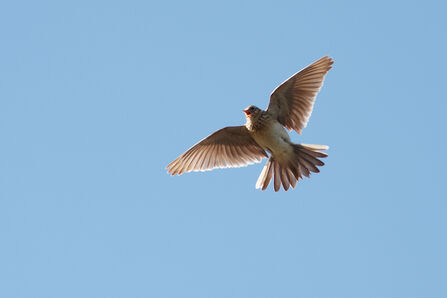
Photo: Stefan Johansson
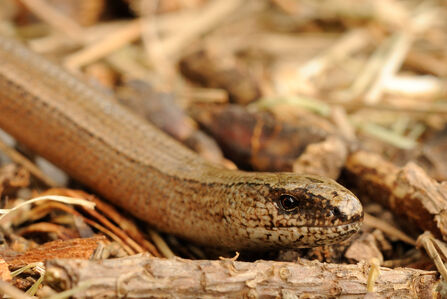
Amy Lewis
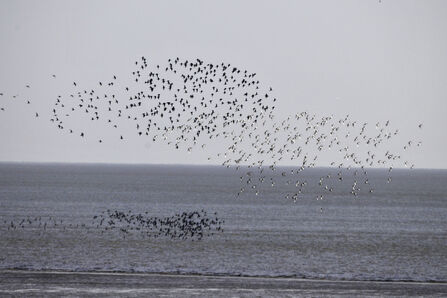
Internationally important numbers of wading birds gather along the Thames
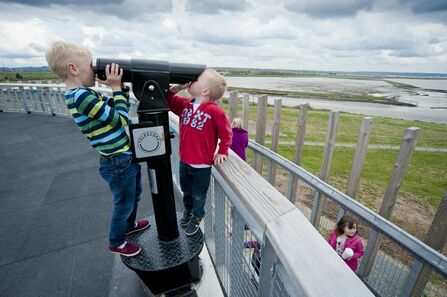
Matthew Roberts
A growing site
Our ambitions for Thameside are not complete. The site will eventually grow to cover around 845 acres, creating an extensive landscape for wildlife alongside opportunities for people to explore and enjoy this natural wonder.


