25 years of helping dormice thrive

25 years of helping dormice thrive

The Essex & Suffolk Dormouse Group celebrates 25 years of monitoring and volunteer action to protect the elusive mammal.

On a warm summers evening in 2001, a group of mammal enthusiasts from Essex and Suffolk gathered in Alresford to discuss how to monitor and protect dormice in the two counties. 

Hazel dormice live in the canopy of trees in woodland and hedges. They are nocturnal, and rarely come to the ground, except during hibernation. They are nimble climbers with sucker-like footpads enabling them to climb vertically up tree trunks. 

In 2001, there were dormouse nest tubes at 20 of Essex Wildlife Trust’s nature reserves, but little was known about populations outside of those few reserves. The last confirmed records from Epping Forest were from 1943, and this lack of confirmed sightings was typical across the county, leading naturalists in the 1960s to conclude that dormice were rare in Essex.

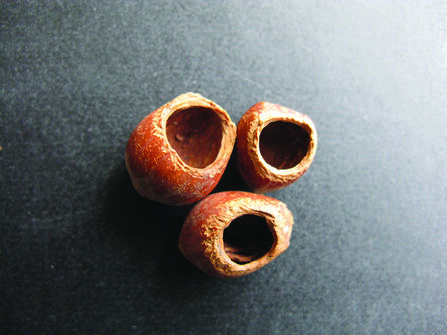
‘The Great Nut Hunt’ of 1993 looked for distinctively chewed hazel nuts, but of the 5,000 nuts gathered from 57 sites, only 18 nuts were found to be eaten by dormice. When feeding on hazel, dormice twist the shell to chisel their way into the nut, leaving a series of diagonal toothmarks on the outside of the hole but a perfectly smooth inside rim, unlike voles and wood mice who leave toothmarks both inside and out.
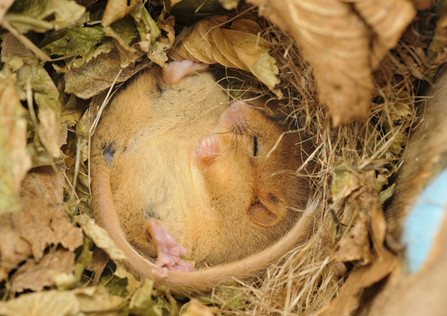
The newly formed Essex & Suffolk Dormouse group began a 3-year project to survey the two counties for dormice. With a grant from Natural England, 10,000 nest tubes were purchased to establish the true extent of this elusive and endangered species. Nest tubes were fixed to horizontal tree branches or bramble stems. The distinctive woven nest of the dormouse confirms that dormice are present, but live animals can also be found, sometimes fast asleep in deep torpor. 

A dozen volunteers were involved in this initial project and when funding came to an end, the growing group of surveyors continued to examine new sites. 

In the first 10 years, another 33 positive sites had been added to the Essex map. The Essex & Suffolk Dormouse Group then became affiliated to the two County Wildlife Trusts, who took over the bulk of training new dormouse handlers in the Eastern Region.

Now in 2026, the Essex & Suffolk Dormouse Group has dozens of volunteers in Essex alone and has achieved some major milestones:

  • Pioneered use of dormouse footprint tunnels
  • Studied dormouse dispersal through specialist tagging methods
  • Conducted the largest ever UK study of how and when dormice use nest tubes
  • Co-authored the 2025 Dormouse Conservation Handbook
  • Coordinated the annual surveys of the Region’s National Dormouse Monitoring Programme sites 

Darren Tansley, Wilder Rivers and Protected Species Manager at Essex Wildlife Trust, says “Citizen Science takes many forms and the work of the Essex & Suffolk Dormouse Group over the last 25 years has not only allowed us to map the population over the two counties, but led to new discoveries about dormouse ecology which has informed National guidance. From a few enthusiastic volunteers in 2001, the Group continues to attract new members across all ages from 18 to 76, and trains the vast majority of licence holders in the Eastern Region so that new generations of surveyors will be able to help conserve this still highly endangered protected species.”

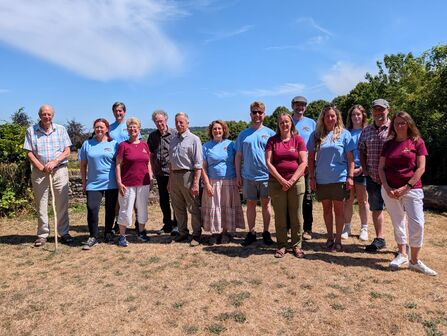
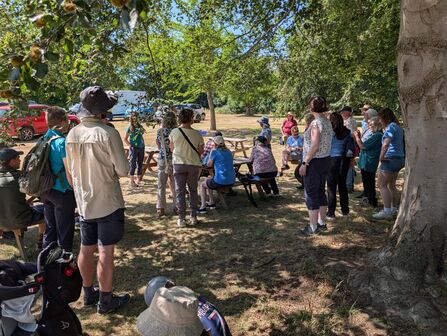
The Group met to celebrate at their Annual General Meeting on Saturday 11 July at the historic Shrubs Farm Barn, in the Dedham Vale. Talks were held by returning Founder Chairman Robin Cottrill, Second Chair Simone Bullion (also author of the new Dormouse Conservation Handbook) and Ian White, National Dormouse lead from People’s Trust for Endangered Species. A field trip to a nearby nature reserve where Essex and Suffolk come together found three live dormice and several distinctive nests.

If you see a dormouse or the tell-tale signs of a hazel nut eaten by a dormouse, send images and location details to tkdormouse@essexwt.org, to help keep the record map up to date.