Life as a Livestock Checker at Blue House Farm

Life as a Livestock Checker at Blue House Farm

After three years volunteering at Blue House Farm, Alan Minister shares how checking livestock has brought him closer to nature, people and the wildlife he's always loved.

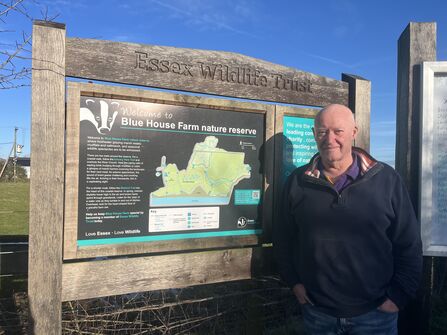
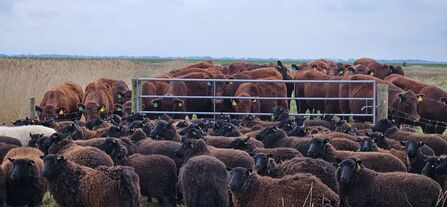
For the past three years, Alan Minister from South Woodham Ferrers has been a familiar and valued presence at Blue House Farm, where he volunteers as a Livestock Checker. Each Saturday, Alan heads out onto the reserve to check on the cattle and sheep, ensuring they are safe, healthy and accounted for.

It's a role that combines responsibility, fresh air and a love of wildlife and one that Alan has fully embraced.
A weekly commitment to the reserve

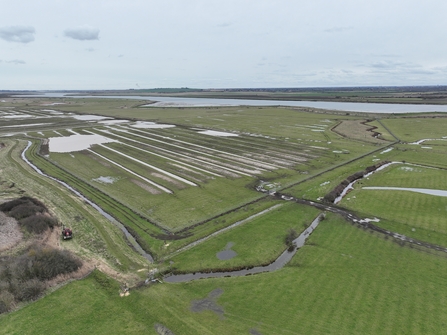
Alan volunteers every Saturday, dedicating between 60 and 90 minutes in the winter, and up to two and a half hours during the summer months when animals may be grazing further afield. Blue House Farm is a large site, and the checks often involve plenty of walking, something Alan enjoys, often extending his visit with a longer walk around the reserve.

If Alan is ever unavailable, another volunteer steps in, and he's equally happy to return the favour by covering weekday checks when needed. It's this shared commitment that helps keep the reserve running smoothly.

From engineering and social care to conservation 

Before volunteering, Alan hadn't worked directly with livestock. His career background is rooted in entirely different fields. First as a prototype development engineer for cars, and later as a residential social worker in Essex children's homes.

Despite this, he has always had a strong interest in wildlife, making the transition into volunteering a natural and rewarding step.

Getting started

Alan first got involved after spotting an advert and thinking it sounded like something he would enjoy. Before starting, Essex Wildlife Trust staff took the time to show him everything he needed to know, from what to expect on site to how to identify any issues with the animals.

He was given a full tour of the farm, introduced to the cows, sheep and lambs, and guided through the responsibilities of the role. The cattle at Blue House Farm are used to people and are known for their calm and friendly nature, helping new volunteers feel at ease.

Highlights from the role 

Over the past three years, Alan has experienced many memorable moments. Lambing season is a particular highlight, offering the chance to see new life on the farm up close.

He also enjoys helping with sheep shearing, working as part of a small team supporting a professional shearer. The work is varied. From trimming sheep’s feet, to passing them along for shearing, to folding and stacking fleeces, gives Alan the chance to be hands-on in an important seasonal task.

Another favourite aspect is talking with visitors. Whether it’s walkers, runners or birdwatchers, Alan enjoys sharing knowledge and hearing what others have seen across the reserve. These conversations often lead to useful exchanges of information and help build a sense of community around the site.

And, for Alan, it’s hard to beat the thrill of spotting barn owls, a special reminder of the wildlife that makes the reserve so important.

The rewards of volunteering 

For Alan, the benefits of volunteering go far beyond the practical tasks. Being outdoors, surrounded by nature, is reward enough in itself.

There’s also a strong sense of purpose in looking after the animals. He recalls one moment last summer when a birdwatcher alerted him to a sheep stuck on its back. Thanks to that timely interaction, Alan was able to help the animal back onto its feet. A simple act, but one that made a real difference.

Equally important are the connections he’s made along the way. From chatting with visitors to working alongside Essex Wildlife Trust staff, Alan values the relationships built through volunteering. He speaks particularly highly of Mason and Yasmin - noting that Yasmin herself began as a volunteer before joining the team, a testament to where volunteering can lead.

A role open to all

Alan’s story shows that you don’t need prior experience to get involved in conservation volunteering, just an interest in wildlife and a willingness to learn.

Three years on, his weekly visits to Blue House Farm continue to be a source of enjoyment, purpose and connection - both to nature and to the people who care about it.