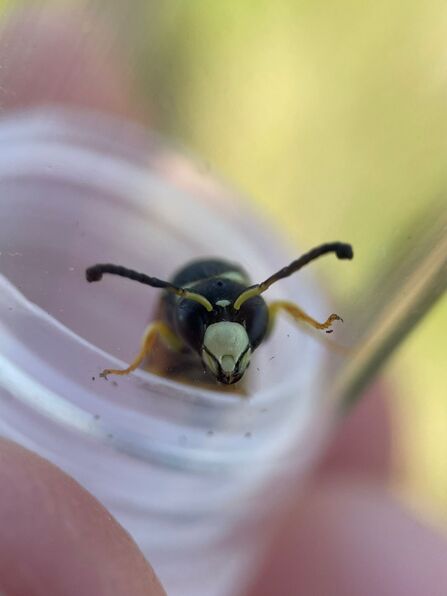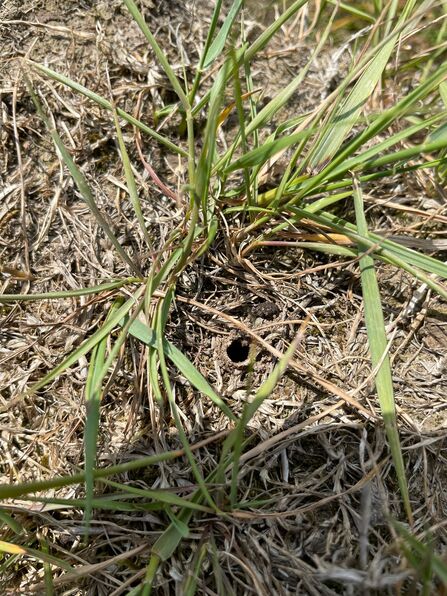
The Fen Mason Wasp has been re-discovered at Essex Wildlife Trust’s Howlands Marsh nature reserve in St Osyth, the first time it has been recorded in Essex for 17 years.
It was considered extinct in Britain until its re-discovery in 1986, but over the past few decades its populations have been limited to the Norfolk Broads and pockets of Suffolk. The species is considered globally rare. Outside of the UK, the nearest population is in eastern Europe, in Poland and Estonia.
Adults are smaller than a common wasp, they are mostly black with creamy stripes and orange legs. The wasp is harmless to humans and poses no threat to the public, as Essex Wildlife Trust assures.
Harry Witts, Ecologist at Essex Wildlife Trust, says, “It is fantastic news that Essex supports a population of this incredibly rare wasp. Don’t worry, this wasp isn’t going to be interested in your jam sandwiches – it has incredibly specific tastes. Mother wasps will only feed their young larvae one species of weevil, which only feeds on two species of wetland plant in the carrot family. The mothers are very dedicated, they will carry weevil larvae back to their nests and build up a stock to feed their young throughout their juvenile stage, until they can pupate and metamorphose into adults.”
The wasp requires coastal grazing marsh and fens, where the wasp builds a ‘chimney’ of mud above the entrance to their burrow. Because of their specific requirements, Fen Mason Wasps are an indicator of high-quality wetland sites.