

Photo: Elliott Neap
Protecting beach-nesting birds
As a county with one of the longest coastline, we must share the shore so that birds can nest on our beaches safely.
Essex Wildlife Trust, RSPB and Bird Aware Essex are working together to protect beach-nesting birds. We do this by creating the ideal habitat for beach-nesting birds, monitoring the populations, and raising awareness with the public. We are also trialling interventions to help protect nests, such as cages, trailcams and zonation, to give them the best possible chance of success.
Dotted along the Blackwater and Colne estuaries, our nature reserves provide the perfect home for Essex’s most threatened beach-nesting birds. Throughout spring and summer, areas of beaches are roped off and signage makes it clear where access is not permitted.
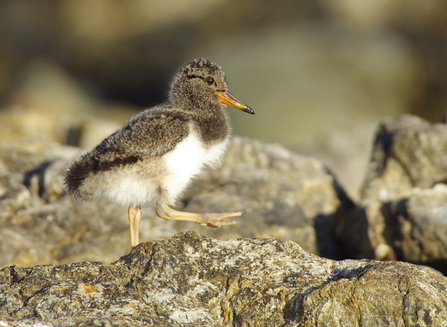
Oystercatcher Chick
Photo: James Rogerson
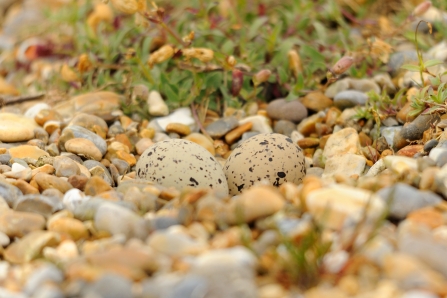
Oystercatcher Nest
Photo: Amy Lewis
Meet our key species
These birds have been identified as significantly at risk with significant population declines, and are all either red or amber-listed.

Photo: Richard Chew
Little tern
Little tern are one of our rarest breeding seabirds, returning each year from West Africa in May to breed on our shingle beaches and feed on fish close to shore. Listen for their chattering call or look for their yellow beak with a black tip.

Photo: Tom Marshall
Ringed plover
Ringed plovers lay their eggs on the beach from March through to the end of summer. These small camouflaged birds feed on insects along the beach and crustaceans along mudflats. In the presence of predators, these birds can pretend to be injured to deter threats away from their nest.

Photo: Elliott Neap
Oystercatcher
Oystercatcher have a distinctive orange beak, red ring around their eyes and smart black and white plumage. They are fiercely territorial and can be heard hassling other birds on the beach. Their diet includes cockles, mussels and worms.
All wild birds' nests and eggs are protected by law and it is illegal to knowingly disturb them. All little terns are afforded special legal protection under Schedule 1 of the Wildlife and Countryside Act 1981 and it is illegal to disturb them during breeding. For more information, please take look at the government guidance. If you witness any disturbance, damage or other crime, please call 999 in an emergency, or 101 in a non-emergency.


