Healthy saltmarshes are some Essex's most valuable coastal habitats, providing homes for wildlife, helping protect our coastline and even storing carbon. Before they can be restored, it's important to understand exactly how they are doing today.
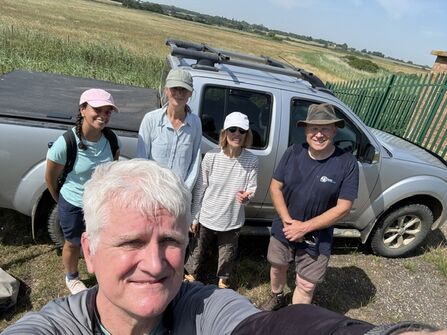
That's why are expert ecologists and volunteers have recently completed comprehensive baseline surveys across two saltmarsh recovery sites at Tollesbury on the blackwater estuary. The work forms part of the transforming the Thames programme, which is helping restore and reconnect important estuarine habitats across the Greater Thames Estuary.
Understanding the marsh
The two survey sites cover around 7.5 hectares of saltmarsh and like many along the Essex coast, have been affected by rising sea levels, tidal erosion and coastal squeeze. Over time, these pressures have caused areas of the marsh to disappear, making restoration increasing important.
Every saltmarsh is different, so understanding the condition of each site is the first step towards creating restoration plans that work with natural coastal processes.
Building a picture of nature
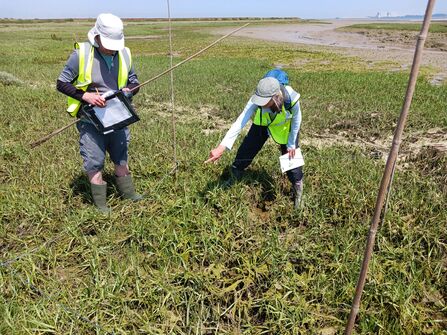
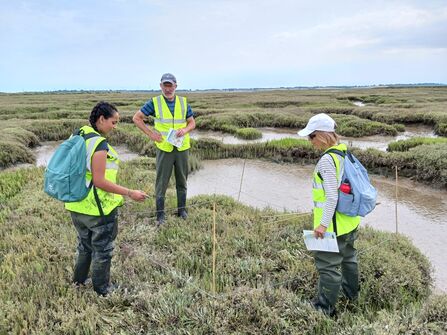
Supported by volunteers, survey teams collected a wide range of information across both sites. They measured vegetation, recorded invertebrates and mapped important habitat features, creating a detailed understanding of the saltmarsh today.
The team used drone technology to produce a detailed aerial map of the vegetation, marsh height and site topography. These surveys will help monitor how the marsh changes over time, where vegetation returns, sediment builds up and where habitats start to recover naturally.
Together, this information provides a valuable baseline that will help measure the success of the future restoration work.
Why saltmarshes matter?
Saltmarshes do more than just provide beautiful coastal landscapes. They create feeding and nursery areas for birds, fish, and shellfish. They act as a natural coastal defence by reducing wave energy and help protect shorelines from erosion.
They also play an important role in tackling climate change by storing carbon in its soil, known as blue carbon. Restoring these habitats support wildlife, strengthen our coastline and helps create more resilient landscapes for the future.
Looking forward
All the information gathered during these surveys will now help shape shape nature based restoration measures designed to slow erosion, trap sediment and encourage the marsh to recover naturally.
By establishing a scientific baseline before restoration starts, the team can track changes over time and understand how effective these measures are. All the knowledge gained will help inform future saltmarsh restoration projects across Essex and the wider Thames Estuary.
Every successful restoration project starts with understanding the landscape. These surveys are important first steps to understanding Tollesbury's saltmarshes and ensuring these habitats continue to thrive, benefiting wildlife and future generations.