Pioneering project launched on the Blackwater Estuary

Pioneering project launched on the Blackwater Estuary

A pioneering project is bringing new hope for wildlife and coastal resilience in Blackwater estuary.

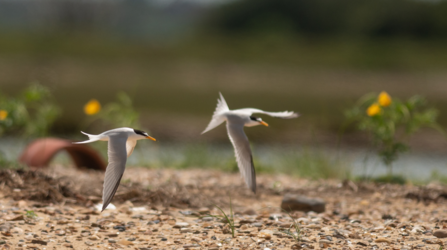
A new initiative will see sediment dredged from Harwich Haven Authority’s routine harbour maintenance dredging reused to restore shingle beach nesting habitat for endangered seabirds, including the amber-listed Little Tern. 

The BUDS (Beneficial Use of Dredged Sediment) project will see the RSPB, Harwich Haven Authority, Essex Wildlife Trust and ZSL, alongside local conservationists, to protect important coastal habitats in the Blackwater Estuary while helping to reduce erosion and flood risk for local communities. 

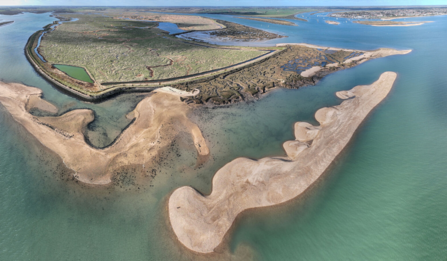
Beginning in October 2026, the £2.5m project (funded by the EA/Defra Natural Flood Management programme and the Transforming the Thames project, led by the Zoological Society of London (ZSL)), will use clean dredged sand gravel, which would otherwise be deposited at sea, to recharge the foreshore at several locations, including Cobmarsh Island and Old Hall Point. The work will help protect saltmarsh and mudflat habitats, reduce pressure on ageing coastal flood defences and create new nesting areas for little terns, ringed plovers and oystercatchers. 

Restored shingle banks will provide vital nesting sites for beach nesting birds during spring and summer, while the wider project will benefit overwintering wading birds and wildfowl. The beaches will also absorb wave energy, protecting saltmarsh and reducing the risk of coastal flooding. 

The project builds on work delivered by the Mersea Harbour Protection Trust and demonstrates how material from essential harbour maintenance can be put to beneficial use, supporting both nature recovery and coastal resilience. 
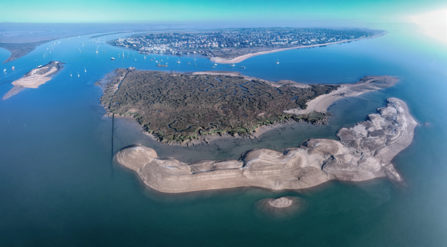
“We’re delighted to be delivering habitat restoration and natural flood management in the Blackwater Estuary with our partners, to support important declining species, whilst helping to reduce flood risk to coastal communities in this part of the Blackwater Estuary.

We’re grateful to Harwich Haven Authority for supplying the material that would otherwise be deposited at sea and feel that the project acts as an important case study for eNGOs and ports working together to protect and restore important landscapes for people and nature”

James Dunn, Senior Project Manager at RSPB

“The BUDS project allows us to take material generated through essential maintenance dredging and put it to beneficial use in and around the wider Haven. By placing sand and gravel at Cobmarsh Island and Old Hall Point, we’re helping to manage these natural materials in a way that supports the resilience of the estuary, while continuing to maintain the safe and navigable channels that are vital to the Haven and UK economy.

“For us as at Harwich Haven Authority, this is about finding practical, sustainable ways to manage the material arising from our dredging operations. Rather than seeing it simply as a by-product of maintaining the navigation channel, BUDS gives us an opportunity to work with natural processes and put that material to good use within the estuary, delivering benefits that will build over time.”

Jim Warner, Harwich Haven Authority’s Harbour Engineer 

“Habitat loss and sea level rise are two of the many increased pressures that wildlife faces along Essex’s coastline, with both detrimentally impacting people too. It’s therefore vital that we explore and deliver innovative ways to help protect it. The BUDS project will create new habitat for threatened beach-nesting birds and other wildlife, whilst helping to protect the local coastline from sea level rise and increased storm surges. Essex Wildlife Trust is proud to be part of a project that benefits both wildlife and humans, working alongside our project partners.”

Alex Smith, Marine and Coastal Engagement Officer, Essex Wildlife Trust

“It is hugely exciting to see this pioneering work underway, that will provide key nesting opportunities for bird life along the Essex Coast. By increasing the amount of habitat available to these species, we are building better connectivity and resilience for the wildlife that depends on the Greater Thames Estuary. This is part of the first phase of the Transforming the Thames seascape recovery project – working to restore over 320 hectares of coastal habitat by 2030.” 

Thea Cox, Senior Restoration Manager, ZSL (Zoological Society of London)