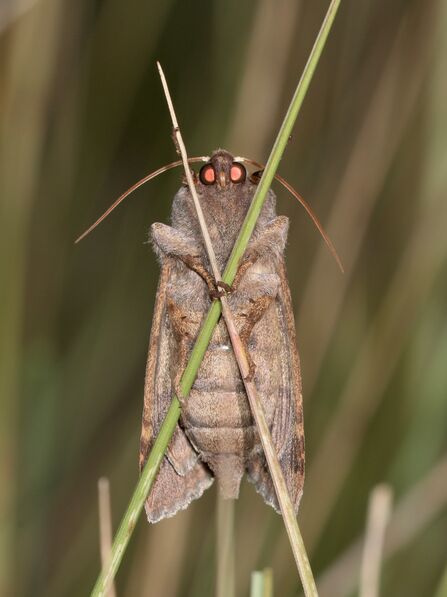
A record 111 Fisher’s Estuarine Moths were recorded at Abbotts Hall this year, the highest number yet over the project’s 21-year span.
Fisher’s Estuarine Moth is one of the most highly threatened species of insect in the UK. It was previously only found on isolated sites on the north Essex and north Kent coast, low-lying land vulnerable to coastal flooding and increasing storm surges.
One of its main strongholds was Skipper’s Island nature reserve in the Walton Backwaters. Managed by Essex Wildlife Trust, this site is inaccessible to the public and has suffered from considerable coastal erosion.
One reason for their vulnerability is the moth’s very specialised habitat requirements. It is completely reliant on the rare plant Hog’s Fennel, as its sole caterpillar foodplant. Hog’s Fennel grows up to 5ft tall, with feathery leaves and yellow flowers that bloom in the summer months. Though the species is found in coastal areas, it is not a salt-water tolerant plant and with rising sea levels it needs to grow further inland to survive and offer food for the rare moth.